- +1 (310)-392-0815
- [email protected]
- 10820 Washington blvd. Culver CIty, CA 90232

Why Some Acting Schools Focus on Emotional Memory Techniques
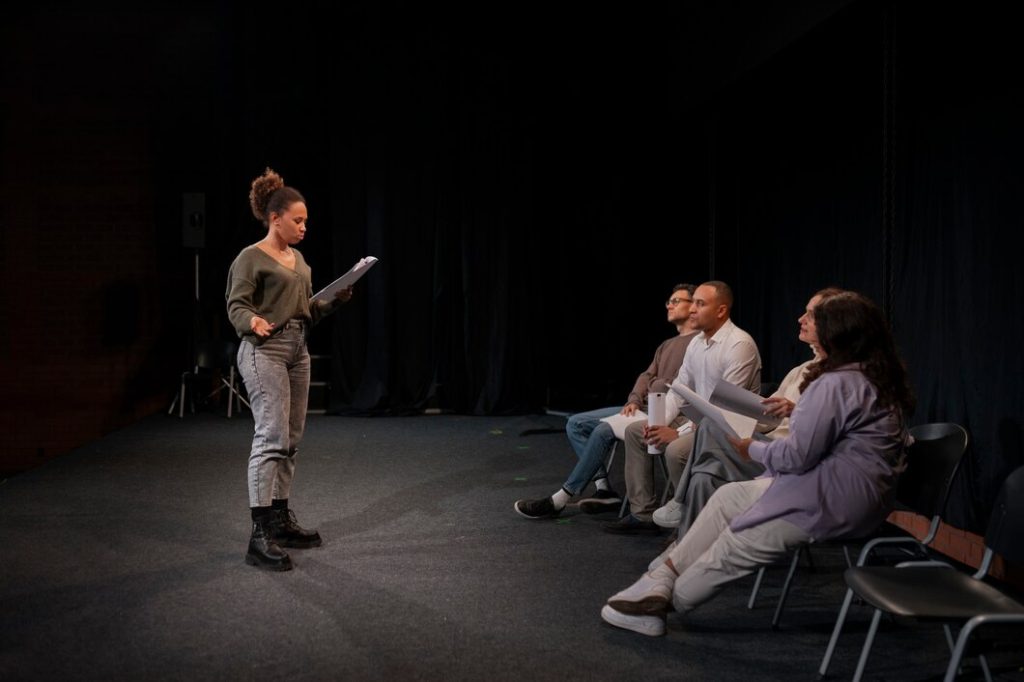
Every acting school brings its own style and tools into the classroom. Some focus more on the body, some on the voice, and others pay close attention to emotion. One method that stands out in certain spaces is emotional memory work. This approach asks students to pull from their real-life experiences to build strong, believable performances.
If you have looked into programs like Stella Adler acting classes, you might notice that some schools use this idea, and others take a different direction. It is not about right or wrong. It is about understanding the method and how it might fit your way of learning. At Michelle Danner Acting Studio in Los Angeles, classes draw from a mix of well-known techniques, including Meisner, Stella Adler, Stanislavski, Lee Strasberg, and Uta Hagen, so actors can explore both emotional memory and imagination-based work in the same training environment.
What Is Emotional Memory, and Why Do Some Actors Use It
Emotional memory starts with looking inside. It is a way for actors to connect to their own feelings and use those feelings to bring a scene to life. Instead of pretending to be sad or scared, the actor might remember a true time when they felt something like that. This makes the performance feel more honest.
Here’s why some acting teachers use this approach:
- It helps actors feel the scene instead of just acting it out
- It can lead to more natural responses in the moment
- It teaches students to recognize and work with their own emotions
Emotional memory can be useful for scenes that ask for deep or complicated feelings. But it does not work the same way for everyone. Some actors find it easier to use memory, while others prefer outside tools like scripts, props, or movement.
How Emotional Memory Shows Up in the Classroom
In acting classes that include emotional memory, the teacher might guide students through short warmups to help bring certain memories into focus. These warmups are not about reliving the past. They are more about recalling small details like how something felt, sounded, or looked.
Some teachers ask questions like, “When was a time you felt proud?” or “Can you remember a moment that made you feel left out?” It is not about sharing the full story with everyone. It is just about calling up a feeling that the student can use on stage.
We have seen that in some schools, like those offering Stella Adler acting classes, teachers lean more toward using imagination rather than memory. They might ask students to build the inner world of a character without connecting it to their own past. Both ways can lead to great performances. It depends on what helps the actor feel connected. At Michelle Danner Acting Studio, the teaching philosophy is to help each actor build a personal “Golden Box” of tools drawn from multiple techniques, so emotional memory becomes one option among many, not the only path.
Benefits of Exploring Emotion in Acting
Learning how to work with feelings does not just help actors cry on cue. It can make everything feel lighter, more grounded, and more real. When a performer connects to emotion in a scene, the audience usually senses it, even if nothing big is happening on stage.
There are a few key gains students often experience when they practice emotional awareness:
- They feel more natural as they talk and move through the scene
- They discover new ways to handle challenging roles
- They notice how their body and voice respond to different emotions
For many, this kind of work is less about acting and more about reacting. When an actor understands how something truly feels, their responses on stage become more believable and less forced.
Choosing the Right Approach for You
No one method works for everyone. Some actors enjoy looking back at personal moments to fuel a scene. Others find that draining or uncomfortable. That is okay. Acting is personal work.
A good class will give students different tools and let them find the ones that feel right. Maybe one student bonds with a scene by remembering a past feeling. Meanwhile, another one builds emotion by thinking through what it would be like to live as that character.
Here’s what we often recommend when thinking about acting methods:
- Try several approaches early on to see what feels honest and useful
- Pay attention to how your body and mind respond to each style
- Respect your own pace and be open to change as you grow
No matter where you are learning, the goal stays the same: finding your truth in the work.
Why Safe Practice Matters When Using Emotional Techniques
Digging into real feelings can be powerful, but it needs to be done carefully. Acting teachers who use emotional memory should always create a space where students feel safe, supported, and never rushed.
That might mean using clear signals to pause or reset during emotional exercises. It could involve setting up boundaries around what is shared out loud. Good classes make space for students to move through strong feelings without judgment or pressure.
In places like Los Angeles, California, where actors come from all different backgrounds and life experiences, safety in class creates the foundation for real work. Everyone should leave class feeling proud of what they tried, not drained from what they gave.
Finding Confidence Through Deeper Connection
When actors feel connected to their role, something shifts. The lines hit differently. The movements become smoother. The audience leans in. That does not happen because someone forced a memory. It happens because the actor felt something real and brought it forward with care.
Whatever method you use, whether it is emotional memory or imagination-led work like in Stella Adler acting classes, the most important thing is that the truth comes through. And when it does, actors often feel more confident in their ability to bring truth forward again and again.
Acting is not just about performance. It is about presence. Connecting to your emotions, whether from your life or your imagination, can help you show up fuller and stronger in each scene.
Curious about how different methods can help you grow as an actor in Los Angeles, California? We guide your learning at Michelle Danner Acting Studio. While some classes emphasize techniques like emotional memory, others, including approaches seen in Stella Adler acting classes, focus more on imagination and creativity. What matters most is finding what grounds you and brings honesty to your work. Whether you want to try something new or expand your technique, reach out to us to take the next step in your acting journey.
Contact us
IN-PERSON ACTING CLASSES
ONLINE ACTING CLASSES
KIDS AND TEEN ACTING CLASSES
INTERNATIONAL STUDENTS
Short term acting classes
Acting workshops
Our Mission
The Michelle Danner Acting School’s philosophy is that artists can draw upon all different acting techniques & form an individual “Golden toolbox” to use when approaching a role or a scene, whether it be for film, television, or theater. The acting school’s acting techniques are based on Meisner, Strasberg, Stella Adler, Uta Hagen & the Stanislavsky acting Technique.
Michelle Danner’s alumni include Penelope Cruz, Seth MacFarlane, Salma Hayek, Henry Cavill, Zooey Deschanel, Gerard Butler, Chris Rock, Chris Martin, Michael Peña, Michelle Rodriguez, Kate Del Castillo and many others.
The acting school offers classes for all levels: beginner, intermediate, and advanced.
• Classes include:
• Acting for Film
• Scene Study
• Cold Reading
• Musical Theater
• Movement
• Voice and Speech
We are one of the elite acting schools in California, known for training successful actors.
A variety of acting classes are offered in Los Angeles to help students hone their craft and jumpstart their careers.
What makes us different
Our acting program differs from other acting schools in Los Angeles, since we teach every acting technique & method, including the Meisner technique, Lee Strasberg’s method, Stella Adler, Stanislavski’s method & Uta Hagen technique.
Online Acting Classes
Scene Study & Monologues |
Meisner acting technique |
Cold Read Auditioning |
Improvisation
- Develop a strong acting foundation.
- Learn to make powerful acting choices
Acting Techniques
• The Actor’s Golden Box (acting technique) | Meisner Acting Technique | Stella Adler Acting Technique | Uta Hagen Acting Technique | Stanislavski Acting Technique | Training & Workshops: | Audition Training Classes & Workshops (Film & Television) | Scene Study Classes & Script Analysis | Improvisation | Performance & Preparation: | Acting Demo Reels | Voice & Speech | General American Accent & Dialects | Industry & Career Guidance: | Breaking into Hollywood: The Business of Acting | Coaching Options: | Private Coaching (Audition Coaching, Dialogue Coaching, On-Set Coaching) | Online Coaching & Private Acting Classes
Contact us
Call us to find out about the best acting classes in Los Angeles and to learn more about our best acting teachers in Los Angeles, 310-392-0815 or email us at [email protected]

Unlock your full potential as an actor—enroll today and take the first step toward mastering your craft with world-class training and personalized coaching
Contact Info
- 10820 Washington blvd. Culver CIty, CA 90232
- 310-392-0815
- Mon-Fri 10am-6pm
join our Newsletter
Sign up for our newsletter to receive acting tips and casting calls.
© 2025 Michelle Danner Acting Studio. All Rights Reserved.