- +1 (310)-392-0815
- [email protected]
- 10820 Washington blvd. Culver CIty, CA 90232

Guide to Building Characters from the Ground Up in Scene Work
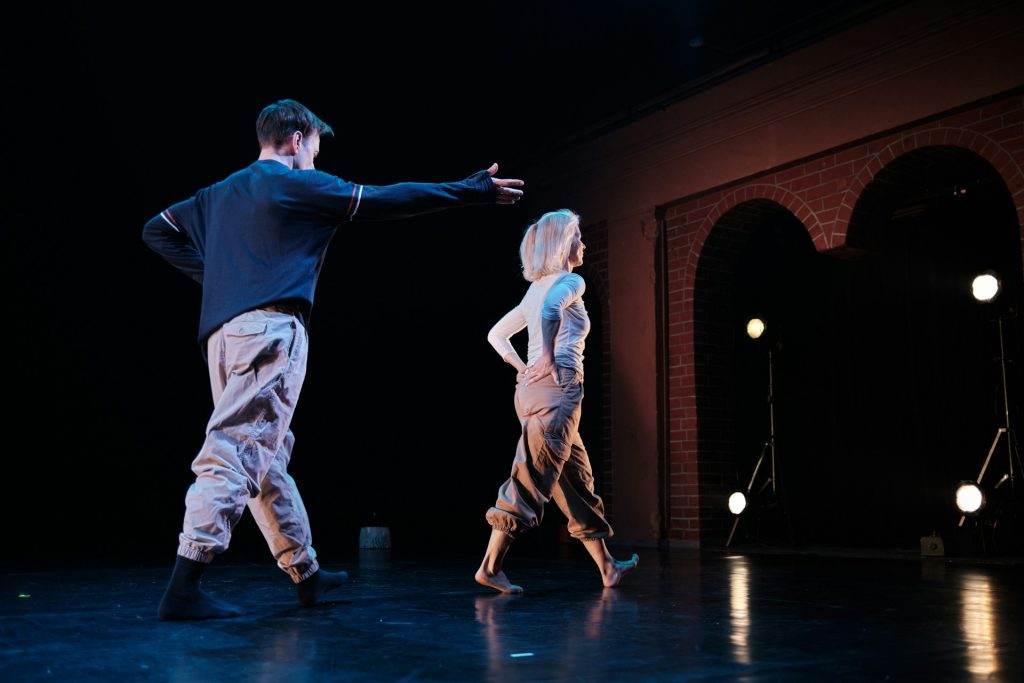
Building a strong character in a scene isn’t about jumping straight into lines or memorizing emotions. It’s about grounding that person in something real. That’s what makes scene work feel honest. In a scene study class, we learn pretty quickly that the best characters don’t come out of thin air. They grow from small, specific choices that stack up over time. Anyone can bring a role to life with practice and a little patience. At Michelle Danner Acting Studio in Los Angeles, our scene study classes focus on character development, script analysis, and emotional truth to help you strengthen your work in film, television, and theater.
In a winter session, especially in a city like Los Angeles, it’s a great time to slow down and focus on the simple steps that make a character believable. Classrooms are quiet, the pace is easier, and attention is better. We don’t need to have all the answers on day one. What matters is learning how to start from the ground up.
Start with Observations, Not Decisions
Before we decide anything about a character, we watch. We listen. People offer so much in the way they move, pause, or pick their words. It only takes a few moments of real-life observation to collect pieces that help build a role.
We always suggest paying attention to people in everyday places, a patient in a waiting room, someone buying coffee, kids walking home from school. These aren’t acting exercises. They’re reminders of how emotion shows up in everyday bodies and voices. When we rush to decide who a character is before picking up these small details, the performance can feel flat.
Instead of crafting a character out of guesses, we try to notice strong, believable behavior in others and borrow from that. These tiny truths can turn into:
- A specific pace of walking that shows nervous energy
- A habit, like tugging a sleeve or adjusting hair during stress
- A speaking rhythm that changes when someone feels unsure
The more layers we gather this way, the closer that character feels to someone who could walk right into the room.
Connect the Character’s Past to the Present Scene
Every character has a past, whether the script shares it or not. What happened before the scene matters just as much as what happens in it. Without knowing what came before, it’s hard to make the choices in the moment feel honest.
We like to ask questions that fill in those blanks. Why did the character walk into the room just now? What were they expecting? Has something like this happened to them before? It’s not about writing a full life story. It’s about picking out the key events that shift how they speak or act.
For example, someone who’s been disappointed over and over might hold back more in their speech, speaking slower or softer until they trust what’s going on. Or, if a character has just lost something important, that sadness may show up in their tone, or the way they glance at others.
These backstory choices become clues that shape performance. We don’t need to explain them out loud. We just let them live underneath the words.
Find Their Voice, Body, and Focus
A character becomes fully real when we don’t only hear them but see them too. Voice and body language tell us more than words ever could. So we pay close attention to:
- How the character stands when they walk into the space
- What they do with their hands when they’re thinking
- Where their eyes go when they speak or stay silent
These tiny choices happen naturally in a scene study class. We see what fits, then shift until it feels right. Maybe the character talks fast to cover up nerves. Or maybe they keep their arms crossed when they’re unsure of someone new.
Rehearsal is the safest place to try these things. We test. We listen. We might get feedback that helps us find a better way to move through the space or deliver a line. That’s where a character’s voice and shape really take hold.
Let the Scene Do the Talking
Sometimes the best acting choice is to say nothing and just listen. Not every emotion needs a grand show. In quiet scenes, slow reactions or natural silence say so much. Being present and grounded helps us avoid trying too hard.
Scenes are meant to carry actors just as actors carry scenes. When we trust what’s already happening, our characters naturally respond. That back-and-forth gives room for real emotion to show up without being planned.
We remind ourselves of these basics during rehearsal:
- Don’t rush to react. Let the moment happen.
- Listen fully. Don’t plan your next line while someone else is talking.
- Let gestures come naturally, not from habit or performance tricks
That space in between words matters. It gives a character time to exist in the scene instead of just performing it.
Keep Building Through Rehearsal
Character work doesn’t end after day one. It grows with time. Every rehearsal teaches us something new about the role. Maybe we thought a line should be angry, but after running it a few times, we see that sadness fits better. Or maybe we find new energy in the way another actor delivers their line. These classes are offered for beginner, intermediate, and advanced actors and draw on techniques such as Meisner, Stella Adler, Stanislavski, and Uta Hagen so you can keep deepening your character work as you progress.
Characters evolve when we’re open to adjusting. That’s why we don’t lock into just one idea. Flexibility helps characters feel alive. If something suddenly clicks halfway through a run, we follow it. It’s a good sign we’re learning something important.
Rehearsals give us freedom to grow. And with each pass, we gather more truth from the role and more comfort in the performance.
Let Your Characters Surprise You
The strongest characters don’t jump out fully formed. They come from thoughtful observation, grounded behavior, and regular practice. We don’t need to force big choices or dramatic energy. Most of the time, small and honest is more powerful.
In a scene study class, we create space to try things, test them, and find what really works. Characters don’t need to be perfect from the start. The more we pay attention, stay curious, and let each rehearsal teach us something, the more those characters grow.
By the time we step fully into a scene, the role feels honest. Not polished. Not dramatic. Just real. That’s what matters most.
When you’re ready to bring your characters to life in a focused and supportive setting, winter is a great time to start. Our scene study class gives you the space to slow down, try things out, and build something real step by step. With each class, you’ll gain confidence, learn to trust your instincts, and feel more grounded in your work. At Michelle Danner Acting Studio, we create the kind of room where real growth happens. Reach out today to get started.
Contact us
IN-PERSON ACTING CLASSES
ONLINE ACTING CLASSES
KIDS AND TEEN ACTING CLASSES
INTERNATIONAL STUDENTS
Short term acting classes
Acting workshops
Our Mission
The Michelle Danner Acting School’s philosophy is that artists can draw upon all different acting techniques & form an individual “Golden toolbox” to use when approaching a role or a scene, whether it be for film, television, or theater. The acting school’s acting techniques are based on Meisner, Strasberg, Stella Adler, Uta Hagen & the Stanislavsky acting Technique.
Michelle Danner’s alumni include Penelope Cruz, Seth MacFarlane, Salma Hayek, Henry Cavill, Zooey Deschanel, Gerard Butler, Chris Rock, Chris Martin, Michael Peña, Michelle Rodriguez, Kate Del Castillo and many others.
The acting school offers classes for all levels: beginner, intermediate, and advanced.
• Classes include:
• Acting for Film
• Scene Study
• Cold Reading
• Musical Theater
• Movement
• Voice and Speech
We are one of the elite acting schools in California, known for training successful actors.
A variety of acting classes are offered in Los Angeles to help students hone their craft and jumpstart their careers.
What makes us different
Our acting program differs from other acting schools in Los Angeles, since we teach every acting technique & method, including the Meisner technique, Lee Strasberg’s method, Stella Adler, Stanislavski’s method & Uta Hagen technique.
Online Acting Classes
Scene Study & Monologues |
Meisner acting technique |
Cold Read Auditioning |
Improvisation
- Develop a strong acting foundation.
- Learn to make powerful acting choices
Acting Techniques
• The Actor’s Golden Box (acting technique) | Meisner Acting Technique | Stella Adler Acting Technique | Uta Hagen Acting Technique | Stanislavski Acting Technique | Training & Workshops: | Audition Training Classes & Workshops (Film & Television) | Scene Study Classes & Script Analysis | Improvisation | Performance & Preparation: | Acting Demo Reels | Voice & Speech | General American Accent & Dialects | Industry & Career Guidance: | Breaking into Hollywood: The Business of Acting | Coaching Options: | Private Coaching (Audition Coaching, Dialogue Coaching, On-Set Coaching) | Online Coaching & Private Acting Classes
Contact us
Call us to find out about the best acting classes in Los Angeles and to learn more about our best acting teachers in Los Angeles, 310-392-0815 or email us at [email protected]

Unlock your full potential as an actor—enroll today and take the first step toward mastering your craft with world-class training and personalized coaching
Contact Info
- 10820 Washington blvd. Culver CIty, CA 90232
- 310-392-0815
- Mon-Fri 10am-6pm
join our Newsletter
Sign up for our newsletter to receive acting tips and casting calls.
© 2025 Michelle Danner Acting Studio. All Rights Reserved.