How Do I Nail a Self-Tape? A Complete Guide to Self-Tape Auditions
Wondering how to nail a self-tape audition? You’re not alone. For actors auditioning for film, television, streaming productions and commercials, knowing how to create a strong self-tape is an essential part of today’s audition process.
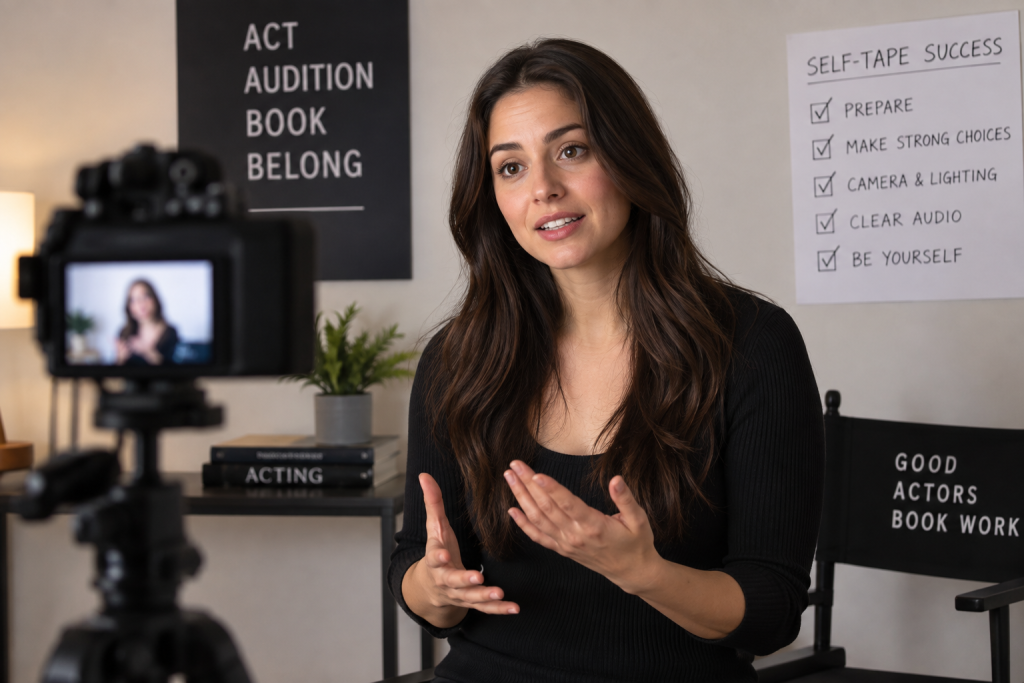
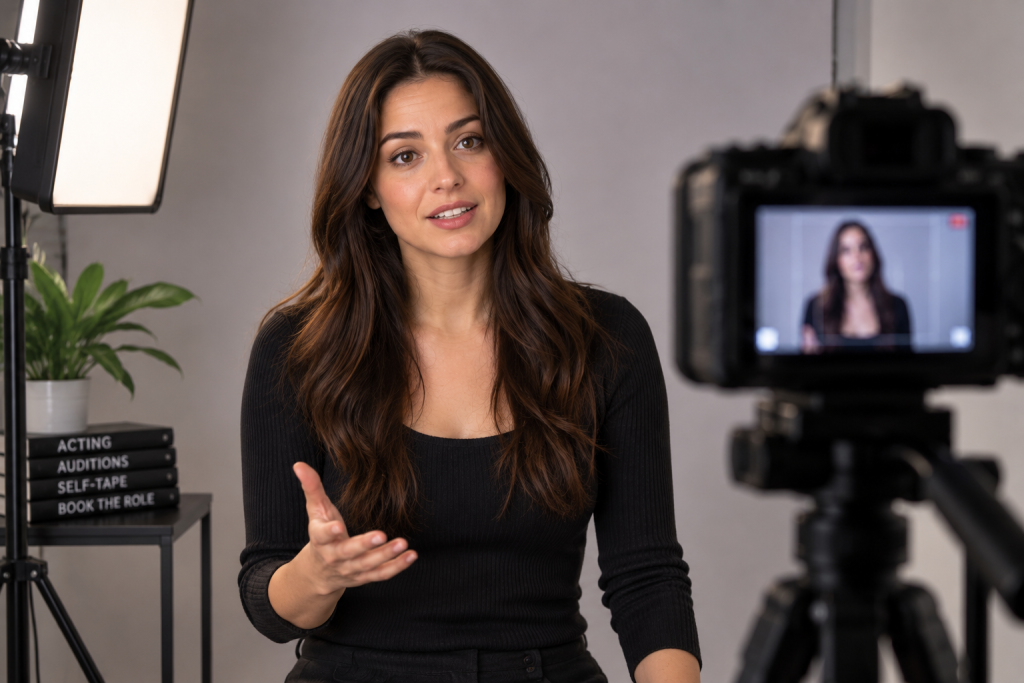
A successful self-tape isn’t simply about putting your phone on a tripod and recording your lines. Your performance, preparation, camera framing, lighting, sound, eyeline, reader, wardrobe and submission all work together to create a professional audition.
So, how do you nail a self-tape?
You prepare thoroughly, make clear acting choices, keep the technical setup simple and let the performance take center stage.
What Is a Self-Tape Audition?
A self-tape audition is an audition that an actor records and submits electronically rather than performing live in a casting room.
Self-tapes allow casting professionals to see an actor’s interpretation of a role before deciding who should move forward in the casting process. SAG-AFTRA has published guidance from casting directors covering everything from lighting and sound to performance, readers, framing and submission.
For actors pursuing careers in Los Angeles, learning how to self-tape professionally can be an important part of audition preparation.
How Do I Nail a Self-Tape?
The key is to think of your self-tape as an acting audition first and a technical project second.
You want the person watching your tape to quickly understand who you are, what you’re doing in the scene and what makes your interpretation specific.
Here are the most important steps.
1. How Should I Prepare for a Self-Tape Audition?
Before you turn on the camera, do your homework.
Read the sides carefully and understand:
- Who is your character?
- What does your character want?
- Who are you talking to?
- What happened immediately before the scene?
- What is at stake?
- What changes during the scene?
- What are the relationships between the characters?
- What is the tone of the project?
Don’t simply memorize words. Understand the circumstances behind them.
Your goal is to make the dialogue feel like something you’re thinking and experiencing in the moment.
Should I Research the Project?
Yes, when information is available.
Research the production, character and overall tone of the project. Professional audition training often emphasizes preparation and understanding where the character fits within the larger story.
However, don’t let research become an excuse to imitate another actor or performance.
Create your own interpretation.
2. Should I Memorize My Lines for a Self-Tape?
Whenever possible, yes.
A self-tape should allow you to connect with your scene partner rather than appear to be reading.
SAG-AFTRA guidance notes that having the script visibly in your hands can be distracting, while keeping the material nearby can provide a discreet reference when necessary.
If you’re struggling with memorization, focus first on understanding the thoughts and intentions behind each line.
When you know what you’re trying to accomplish, the words become easier to remember.
3. How Should I Act for the Camera?
One of the biggest mistakes actors make is trying to “perform” for the camera.
You don’t need to push your emotions.
The camera can capture subtle changes in thought, listening and reaction. SAG-AFTRA’s self-tape guidance emphasizes connection, eye contact and being mindful of movement in and out of frame.
Think:
Listen → Think → Respond.
Instead of:
Say line → Show emotion → Say next line.
Your job is to live truthfully in the circumstances of the scene.
4. Where Should I Look During a Self-Tape?
Your eyeline matters.
Generally, you should look just off-camera toward your reader rather than directly into the lens unless the audition instructions specifically tell you to look into camera.
Your reader should give you something to respond to.
The goal is for the viewer to feel that you’re actually listening to another person.
5. What Camera Should I Use for a Self-Tape?
You don’t necessarily need an expensive camera.
A modern smartphone can produce a professional-looking audition when used correctly. SAG-AFTRA has specifically noted that actors can create quality self-tapes using smartphones rather than automatically investing in expensive camera equipment.
What matters most is using the equipment you have effectively.
Self-Tape Camera Checklist
Before recording, check:
- Is the lens clean?
- Is the camera stable?
- Is the image sharp?
- Is your face properly exposed?
- Is the camera at an appropriate height?
- Is the frame consistent?
- Are you following the casting instructions?
Unless instructions specify otherwise, SAG-AFTRA guidance recommends recording auditions horizontally rather than vertically.
6. What Is the Best Lighting for a Self-Tape?
Good lighting doesn’t have to be complicated.
Your face should be clearly visible without harsh shadows or distracting backgrounds.
SAG-AFTRA’s self-taping guidance identifies lighting as one of the important technical elements of a self-tape and recommends finding a location where the lighting works well rather than assuming you need an elaborate setup.
Try This Simple Setup
Position yourself facing a soft, even light source.
Avoid:
- Strong backlighting
- Extremely dark rooms
- Bright windows directly behind you
- Harsh overhead lighting
- Distracting colored lights
Before your audition, record a short test.
Look at the image.
Can you clearly see your eyes and face?
If yes, you’re on the right track.
7. How Important Is Sound in a Self-Tape?
Very important.
A great performance becomes difficult to appreciate if the viewer can’t clearly hear you.
Choose a quiet location and listen carefully for:
- Air conditioning
- Traffic
- Construction
- Echo
- Appliances
- Other people
- Background music
You don’t necessarily need expensive audio equipment. SAG-AFTRA guidance has discussed simple microphone solutions and emphasizes the importance of clear audio.
Do a test recording before filming the actual audition.
8. What Should I Wear for a Self-Tape?
Keep your wardrobe simple.
Your clothing should suggest the character without becoming a costume.
For example, if you’re auditioning for a police officer, you don’t necessarily need to wear a full uniform. A simple wardrobe choice that suggests the character may be enough.
Avoid clothing that:
- Distracts from your face
- Creates excessive patterns on camera
- Makes you look like you’re wearing a costume
- Competes with the background
The performance should remain the focus.
9. Do I Need a Reader for My Self-Tape?
A good reader can make a significant difference.
Your reader should:
- Know the scene
- Give you something to react to
- Keep their performance supportive rather than competitive
- Maintain an appropriate pace
- Avoid pulling attention away from you
The reader is there to help create the circumstances of the scene.
You are the audition.
10. How Many Takes Should I Record?
Don’t automatically assume the first take is your best take.
Record enough takes to find the strongest version without endlessly changing your performance.
Try making different choices.
For example:
1st take: Explore the scene naturally.
2nd take: Make the objective more specific.
3rd take: Trust the preparation and simplify.
Then watch them back.
Ask yourself:
- Which take feels most truthful?
- Which one feels most specific?
- Which one feels most connected?
- Which one best communicates the character?
Choose the take that serves the scene—not necessarily the one where you look the most “perfect.”
11. How Can I Avoid Overacting in a Self-Tape?
This is one of the most important self-tape audition tips.
Remember that the camera is close.
You don’t need to demonstrate every emotion physically.
Instead of trying to show anger, sadness, fear or excitement, focus on what your character wants.
Emotion often becomes more believable when you’re pursuing an objective rather than trying to manufacture a feeling.
On-camera acting requires actors to understand how small changes can register on camera. Michelle Danner Acting Studio’s on-camera training emphasizes truthful performance, listening, emotional precision and avoiding overacting.
12. How Do I Make My Self-Tape Stand Out?
Don’t try to stand out by doing something flashy.
Stand out by being:
Specific. Truthful. Prepared. Present.
Casting directors may review many auditions, so your goal isn’t to make the tape look like a movie trailer.
Your goal is to make a strong acting choice that feels right for the character.
SAG-AFTRA’s casting-director guidance emphasizes that self-tapes are an opportunity for actors to demonstrate their skills and understanding of a role.
13. Should I Edit My Self-Tape?
Keep editing simple.
Follow the casting instructions exactly.
If you’re allowed to edit, remove unnecessary footage or technical mistakes, but don’t turn the audition into a heavily produced video.
SAG-AFTRA guidance recommends simple editing and cautions against unnecessary titles, text or transitions that can distract from the audition.
Your self-tape should look like an audition—not a social media video.
14. How Quickly Should I Submit a Self-Tape?
Pay close attention to the deadline.
If you can submit a strong audition early, that’s often preferable to waiting until the last minute.
But don’t sacrifice preparation simply to be first.
Your priority should be:
Prepare → Record → Review → Follow instructions → Submit.
Always check the exact submission requirements provided by casting.
What Are the Most Common Self-Tape Mistakes?
Here are some of the most common problems actors should avoid:
❌ Poor Lighting
If casting can’t clearly see you, the technical setup becomes a distraction.
❌ Bad Sound
Background noise, echo or low volume can make a strong performance difficult to watch.
❌ Reading the Sides
Having the script visibly in your hand can distract from the performance.
❌ Overacting
The camera doesn’t require you to “show” every emotion.
❌ Looking Directly Into Camera
Unless instructed, connect with your reader rather than staring into the lens.
❌ Distracting Backgrounds
Keep the background simple and uncluttered.
❌ Too Much Editing
Don’t add flashy transitions, music or graphics unless specifically requested.
❌ Ignoring the Instructions
If casting asks for a particular slate, framing, file format, wardrobe or delivery method, follow the instructions.
Should I Take Self-Tape Audition Classes in Los Angeles?
If you regularly audition for film and television, self-tape audition classes in Los Angeles can help you practice the process before you’re under the pressure of a real casting deadline.
A class allows actors to repeatedly work on:
- Self-tape technique
- On-camera acting
- Audition preparation
- Cold reading
- Character preparation
- Scene analysis
- Camera awareness
- Eyelines
- Working with a reader
- Making specific acting choices
- Receiving feedback
Michelle Danner Acting Studio offers training in self-tape preparation, audition technique, on-camera acting and film and television auditions. Its audition training includes working with film and TV material and developing a personalized set of acting tools.
The studio’s self-tape training has also focused on both the performance and technical sides of self-taping, including creating engaging tapes, camera setup and receiving feedback on recorded scenes.
Why Take Self-Tape Classes in Los Angeles?
Los Angeles is one of the world’s major entertainment centers, and actors here regularly prepare for film, television, streaming and commercial auditions.
Learning self-tape technique in an acting class gives you the opportunity to practice the same skills repeatedly rather than trying to figure everything out when a real audition arrives.
At Michelle Danner Acting Studio in Los Angeles, actors can train in on-camera acting, audition technique, cold reading, self-tape preparation and film acting.
The studio’s approach combines different acting techniques to help actors develop their own individual “Golden Box” of tools they can use when approaching a role or scene.
What Should I Practice Before My Next Self-Tape?
Before your next audition, run through this checklist.
Self-Tape Audition Checklist
ACTING
- Understand the character.
- Know what my character wants.
- Understand the circumstances.
- Make specific choices.
- Practice listening and reacting.
TECHNICAL
- Camera is stable.
- Lighting is clear.
- Audio is clean.
- Background is simple.
- Framing follows the instructions.
PERFORMANCE
- Be connected to my reader.
- Do not be overacting.
- Make sure you are not staring at the camera unless instructed.
- Be comfortable with the material.
SUBMISSION
- Follow the casting instructions.
- Check the file.
- Watch the final version.
- Submit before the deadline.
Frequently Asked Questions About Self-Tape Auditions
How do I nail a self-tape audition?
Prepare the material thoroughly, understand the character’s objective, make specific choices, create a clean technical setup and focus on truthful, connected acting rather than trying to impress the camera.
What is the best camera for a self-tape?
A modern smartphone can be sufficient for many self-tape auditions. The quality of the performance, lighting, sound, framing and adherence to casting instructions are all important.
Should I look into the camera during a self-tape?
Usually, you should look just off-camera toward your reader unless the audition instructions specifically request direct-to-camera performance.
Do I need professional lighting for a self-tape?
Not necessarily. You need lighting that allows your face and eyes to be seen clearly without distracting shadows or glare.
Should I memorize my self-tape?
Whenever possible, yes. Being familiar with the material allows you to focus on your scene partner and the character rather than appearing to read.
How long should a self-tape audition be?
Follow the casting instructions. If a specific time limit is given, stay within it.
What should I wear for a self-tape?
Choose simple clothing that supports the character without becoming a costume or distracting from your face and performance.
Can I take self-tape classes online?
Yes. Online self-tape and audition training can be useful for actors who aren’t able to attend an in-person class in Los Angeles. Michelle Danner Acting Studio has offered online audition training using film and television sides and live instruction.
Where can I take self-tape audition classes in Los Angeles?
Actors looking for self-tape audition classes in Los Angeles can explore training at Michelle Danner Acting Studio, where self-tape preparation is incorporated into audition and on-camera training.
Ready to Improve Your Self-Tape Auditions?
A great self-tape starts long before you press record. It starts with:
- Preparation.
- Understanding the character.
- Making a choice.
And it starts with learning how to trust yourself in front of the camera.
If you’re an actor in Los Angeles looking to strengthen your self-tape auditions, on-camera acting and film and TV audition technique, training can give you the opportunity to practice these skills consistently and receive professional feedback.
Michelle Danner Acting Studio offers acting classes in Los Angeles for beginners, intermediate and advanced actors, including on-camera acting, audition technique, self-tape preparation and film and television audition training.
Start preparing for your next audition today.