
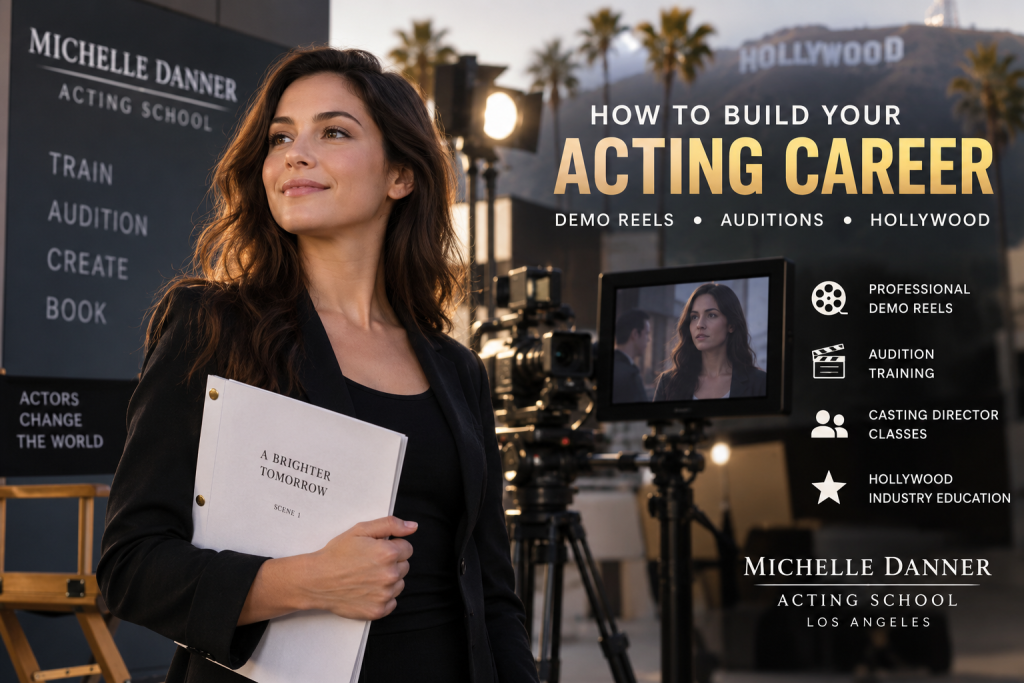
How to Build Your Acting Career: Demo Reels, Casting Director Training & Breaking Into Hollywood
If you want to work professionally as an actor, talent is only one part of the equation. You also need to know how to present yourself, how to audition, how to create professional acting footage, how to submit for roles, and how the film and television industry works.
At Michelle Danner Acting School in Los Angeles, actors can develop both their performance skills and the practical tools needed to pursue opportunities in film and television.
From acting demo reels and self-tapes to casting director training and the business of acting, professional training can help actors understand what they need to do before, during, and after an audition.
How Important Is an Acting Demo Reel?
If you want to work as an actor, you need professional footage that shows casting professionals what you can do.
Your headshot gets their attention. Your acting demo reel shows them what you can do.
An acting demo reel, also called an actor demo reel or acting reel, is a short collection of professional scenes designed to showcase your acting ability on camera.
Casting directors, agents, managers, and producers may use your reel to get a sense of your:
- Acting ability
- On-camera presence
- Range
- Character choices
- Emotional availability
- Screen presence
- Ability to work in different genres
- Potential casting type
A strong demo reel gives industry professionals an opportunity to see you perform rather than relying only on a headshot and résumé.
What Should Be Included in an Acting Demo Reel?
Your demo reel should be designed around you as an actor.
Rather than simply collecting random footage, your scenes should showcase the qualities that make you interesting and castable.
A professional acting reel may include carefully selected scenes that demonstrate different aspects of your performance, depending on your experience and career goals.
Create Your Acting Demo Reel From Start to Finish
At Michelle Danner Acting School, actors can create professional reel footage through a process that includes:
✓ Scene selection designed to showcase your strengths
✓ Professional directing
✓ High-quality filming
✓ On-camera performance
✓ Editing and color correction
✓ Complete post-production
✓ Finished footage ready to use for professional promotion
The objective is to create footage that gives you something valuable to use when presenting yourself for acting opportunities.
Don’t Wait for Someone to Give You Acting Footage
One of the challenges new actors face is the need for professional footage before they have accumulated enough professional credits to create a reel.
You don’t necessarily have to wait for someone to cast you before you begin building your portfolio.
Create your own professional footage.
A professionally produced acting reel can give you material to use when building your online casting profiles, approaching representation, submitting for appropriate opportunities, and presenting yourself professionally.
Show them what you can do. Show them why they should consider you.
How Do I Get More Auditions for Film and Television?
Getting auditions involves more than simply having acting ability.
Actors also need to understand how opportunities are found, how submissions work, how casting professionals evaluate materials, and how to present themselves professionally.
This is where casting director training and audition training can become valuable.
At Michelle Danner Acting School, actors can train in audition technique while also learning about the professional process of pursuing film and television work.
Casting Director Bootcamp: 4 Stages of the Working Film and TV Actor
What happens after an actor starts auditioning?
The Casting Director Bootcamp: 4 Stages of the Working Film and TV Actor is designed to help actors understand different levels of film and television roles and the expectations associated with them.
The intensive covers a new stage every two weeks, progressing through different types of roles.
Stage 1: Co-Star and Feature Roles
Actors explore the preparation and expectations associated with co-star and feature roles and learn how to approach professional film and television material.
Stage 2: Guest Star
The training then moves into guest star roles, helping actors understand the increased demands of larger television opportunities.
Stage 3: Recurring and Supporting Roles
Actors explore recurring and supporting roles, including the preparation and professional expectations that come with becoming a more established television performer.
Stage 4: Series Regular and Lead Roles
The final stage focuses on series regular and lead roles, allowing actors to explore the responsibilities and expectations associated with larger parts.
The intensive also covers commercial acting work and concludes with a mock audition in the final class, giving actors an opportunity to put their training into practice.
How Do I Break Into Hollywood as an Actor?
Breaking into Hollywood is not simply about moving to Los Angeles and hoping to get discovered.
Actors need to understand the business side of the profession.
This includes learning how to:
- Prepare professional headshots
- Build an acting résumé
- Create an acting demo reel
- Develop an online casting profile
- Find auditions
- Submit yourself for roles
- Understand the agent process
- Market yourself as an actor
- Develop your professional brand
- Understand SAG-AFTRA
- Increase audition opportunities
- Build relationships within the industry
For actors searching for how to become an actor in Hollywood, how to get an acting agent, how to find film auditions, or how to start an acting career, understanding the business can be just as important as developing your acting technique.
Breaking Into Hollywood: The Business of Acting — 2-Day Intensive
How to Start Working as an Actor — Before You Waste Years Guessing
If you are waiting for the “right moment” to start building your acting career, learning how the industry works can be an important first step.
The Breaking Into Hollywood: The Business of Acting intensive gives actors a practical roadmap for pursuing work in film and television.
Actors can learn how to submit for film and television opportunities from anywhere in the country or the world and how to present themselves professionally when pursuing projects casting in Hollywood and elsewhere.
Whether you are:
- A beginning actor
- Looking for an agent
- Trying to get more auditions
- Already represented
- Trying to book more work
- Ready to take your acting career to the next level
this intensive focuses on practical industry information and career strategy.
Day 1: The Actor’s Career Toolkit
The first day focuses on the tools actors need when beginning to build a professional film and television career.
Topics include:
- Headshots
- Acting résumés
- Demo reels
- Online casting profiles
- Actor branding
- SAG-AFTRA
- Self-submissions
- Audition opportunities
- How casting directors evaluate actors
- Understanding the entertainment business
The goal is to help actors understand what they need before pursuing representation and auditions.
Day 2: The Actor’s Industry Strategy
The second day focuses on creating a personalized strategy for moving forward.
Topics include:
- How to pursue work without an agent
- Understanding the agent process
- Increasing audition opportunities
- Marketing yourself as an actor
- Developing your professional brand
- Creating a career strategy
- Identifying your next practical career steps
By the end of the intensive, actors will have a clearer understanding of how to present themselves professionally, how representation works, how to begin pursuing auditions, and what practical steps they can take toward developing their acting career.
Who Is This Acting Career Intensive For?
This intensive is designed for actors who:
- Need an agent
- Are trying to get to the next level
- Are unhappy with the number of auditions they are receiving
- Want to learn how to find more opportunities
- Already have representation but want to pursue additional opportunities
- Need help understanding the business side of acting
- Want to learn how to professionally market themselves
What Do Actors Need to Start a Film and TV Career?
There is no single formula for becoming a working actor, but professional actors need more than acting technique alone.
A practical career toolkit can include:
Acting Training + Headshot + Résumé + Demo Reel + Casting Profiles + Audition Skills + Industry Knowledge + Career Strategy
Developing these components together can help actors present themselves more professionally while continuing to improve their craft.
Train as an Actor and Learn the Business
Michelle Danner Acting School in Los Angeles offers training for actors who want to develop their performance skills while also understanding the practical side of pursuing a career in entertainment.
Training opportunities include acting classes in Los Angeles, audition acting classes, film and television acting, scene study, private acting lessons, audition coaching, filmmaking classes, acting demo reel creation, and online acting classes.
For actors who cannot attend in person, online acting classes and online acting coaching provide another way to continue developing acting and audition skills.
For actors in Los Angeles, combining acting training, audition preparation, on-camera experience, filmmaking knowledge, professional footage, and industry education can provide a more comprehensive approach to career development.
Start Building Your Acting Career
You don’t have to wait until you have everything figured out before you begin.
Build your acting skills.
Create professional footage.
Learn how auditions work.
Understand the business.
Learn how to submit yourself.
Develop your professional materials.
And create a strategy for pursuing your next opportunity.
Your headshot introduces you. The résumé tells them what you’ve done. Demo reel shows them what you can do. And your audition gives you the opportunity to perform.
At Michelle Danner Acting School, actors can develop the craft, audition skills, professional materials, and industry knowledge needed to take practical steps toward pursuing work in film and television.