It is one of the most common questions actors ask when they begin working in film, television, commercials, auditions, and self-tapes.
Acting for the camera is different from performing on stage. The camera can capture subtle changes in your eyes, facial expressions, breathing, listening, and physical behavior. Because of this, trying too hard to “act” can sometimes make a performance feel forced or unnatural.
The key to natural on-camera acting is not doing less simply for the sake of doing less. It is learning how to listen, respond, stay present, understand the character, make specific choices, and trust the camera to capture the performance.
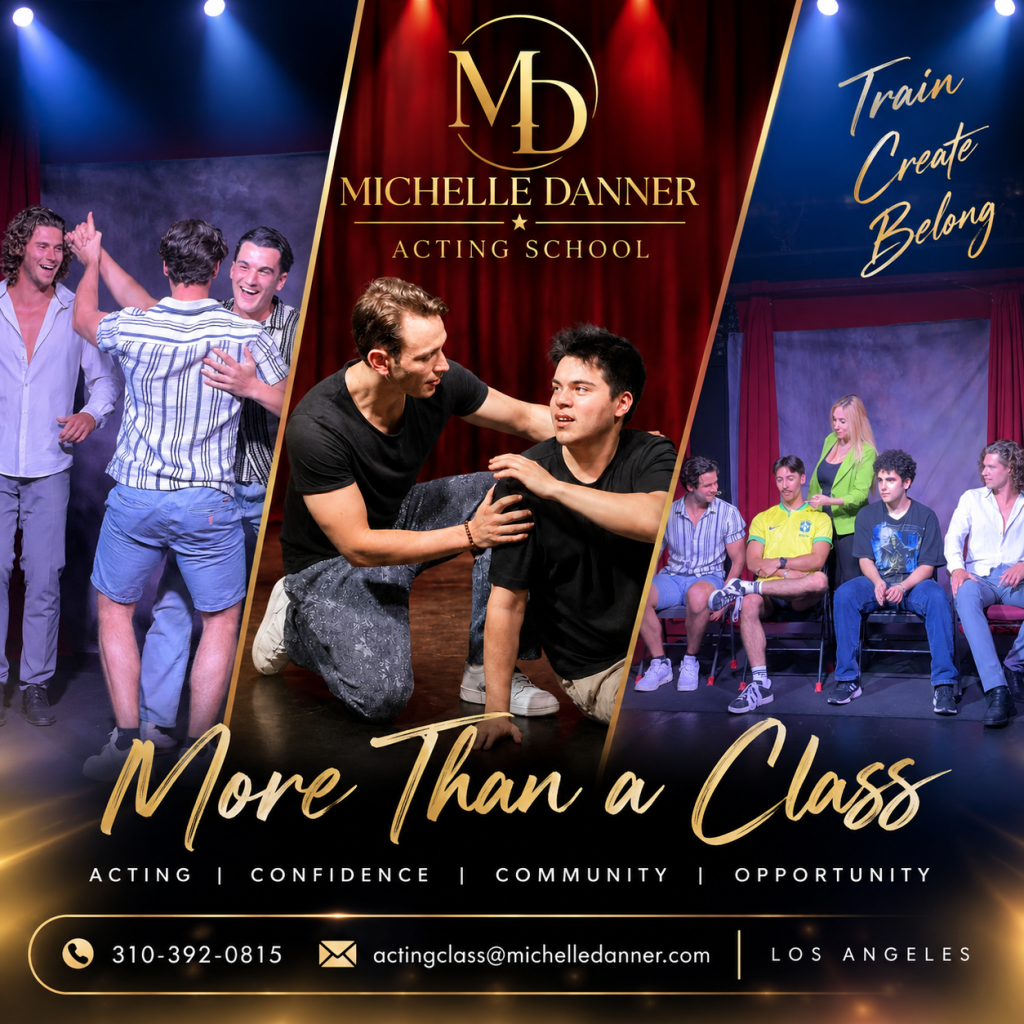
At Michelle Danner Acting School in Los Angeles, actors can develop these skills through on-camera acting classes, film and television acting classes, audition training, scene study, filmmaking classes, private acting lessons, and online acting classes.
How Can I Act More Naturally on Camera?
Natural screen acting begins with behaving truthfully within the circumstances of the scene.
Instead of thinking, “How should I look right now?”, focus on what your character wants and what is happening between the characters.
Ask yourself:
- What does my character want?
- Who am I talking to?
- What happened before this scene?
- What am I trying to accomplish?
- What is at stake?
- What am I feeling but not saying?
- How does the other character affect me?
- What changes during the scene?
When an actor becomes focused on the character’s circumstances rather than trying to demonstrate emotion to the camera, the performance can become more spontaneous and believable.
Why Does Acting on Camera Feel So Different?
Actors coming from theater sometimes find that their stage habits are too large for the camera.
On stage, an actor may need to project their voice and physical behavior to an audience across a theater.
Film and television cameras can capture much smaller details.
A camera can see:
- A change in your eyes
- A breath
- A pause
- A slight smile
- A reaction
- A moment of hesitation
- A subtle shift in behavior
- The way you listen
This is why film acting classes emphasize specificity and truthful behavior rather than simply making a performance smaller.
The objective isn’t to eliminate your personality or energy. It is to learn how to make your performance work within the frame.
What Is On-Camera Acting?
On-camera acting is the practice of performing specifically for film, television, commercials, digital content, and other camera-based productions.
Unlike stage acting, screen acting involves understanding how your performance interacts with:
- Camera distance
- Framing
- Eyelines
- Close-ups
- Medium shots
- Wide shots
- Camera movement
- Editing
- Continuity
- Scene partners
- Multiple takes
Actors also need to understand that a scene may be filmed from several different angles.
A performance that works in a wide shot may need to be repeated consistently in a close-up.
Learning how to maintain the emotional life of a scene while adapting to the technical requirements of filmmaking is an important part of on-camera acting training.
How Do I Stop Overacting on Camera?
One of the biggest challenges for beginning screen actors is overacting.
Overacting can happen when an actor tries to communicate an emotion directly to the audience instead of experiencing the circumstances of the character.
For example, instead of trying to “look angry,” an actor can focus on what the character wants from the other person and why they are not getting it.
Instead of trying to “look sad,” focus on the circumstances that make the character feel loss, disappointment, fear, or longing.
Instead of demonstrating an emotion, play the objective.
The camera can often capture the emotional response without the actor having to push it.
How Do I Make My Facial Expressions Look Natural on Camera?
Actors sometimes become overly conscious of their face when a camera is pointed at them.
You may start thinking:
“Am I smiling enough?”
“Do I look angry?”
“What am I doing with my face?”
This can immediately take you out of the scene.
Instead, concentrate on listening and responding.
Your facial expressions should generally be a result of what is happening to the character rather than something you deliberately add because you think the audience needs to see an emotion.
This is one reason scene study and on-camera acting classes can be valuable: actors can practice responding truthfully instead of trying to manufacture reactions.
How Do I Look Natural in a Self-Tape?
Self-tapes have become an important part of the audition process for many actors.
However, performing alone in front of a camera can feel unnatural at first.
To make a self-tape feel more authentic:
- Know the Scene
Don’t simply memorize the words. Understand the circumstances, relationships, objectives, and stakes.
- Listen to Your Reader
Your scene partner gives you something to respond to. Don’t rush to deliver your next line.
- Keep Your Focus on the Scene
Your attention should be on the character and circumstances rather than on how you look on the screen.
- Don’t Chase Emotion
Trying to force an emotional response can make a performance appear less natural.
- Practice Without the Camera
Rehearse the scene enough that you understand it, but avoid repeating it so many times that every reaction becomes mechanical.
- Review Your Self-Tape
Watching yourself can help you identify habits such as excessive movement, rushed dialogue, unnecessary facial expressions, or inconsistent eyelines.
Self-tape acting classes can provide an opportunity to practice these skills with professional feedback.
How Can I Improve My Screen Presence?
Screen presence isn’t simply about having a certain appearance.
It can come from being present, specific, connected, and truthful while the camera is observing you.
Strong screen presence can involve:
- Listening
- Stillness
- Confidence
- Specificity
- Authentic reactions
- Strong choices
- Emotional availability
- Connection with scene partners
- Understanding the camera
- Staying grounded in the circumstances
The goal isn’t to “perform for the camera.”
The goal is to live truthfully within the scene while understanding how the camera captures you.
Should Actors Take On-Camera Acting Classes?
If you want to work in film or television, on-camera acting classes can give you an opportunity to practice skills that are difficult to develop by reading about them alone.
In a camera acting class, actors can work on:
- Film and television scenes
- Audition preparation
- Self-tapes
- Scene study
- Cold reading
- Character development
- Camera technique
- Eyelines
- Close-ups
- Continuity
- Taking direction
- Multiple takes
- Subtle screen performance
The benefit of regular practice is that actors can experiment, make mistakes, receive feedback, and develop a more comfortable relationship with the camera.
Why Take Film Acting Classes in Los Angeles?
Los Angeles provides an environment where actors can train specifically for film and television.
Film acting classes in Los Angeles can introduce actors to the unique demands of screen performance while allowing them to work on scenes and camera technique.
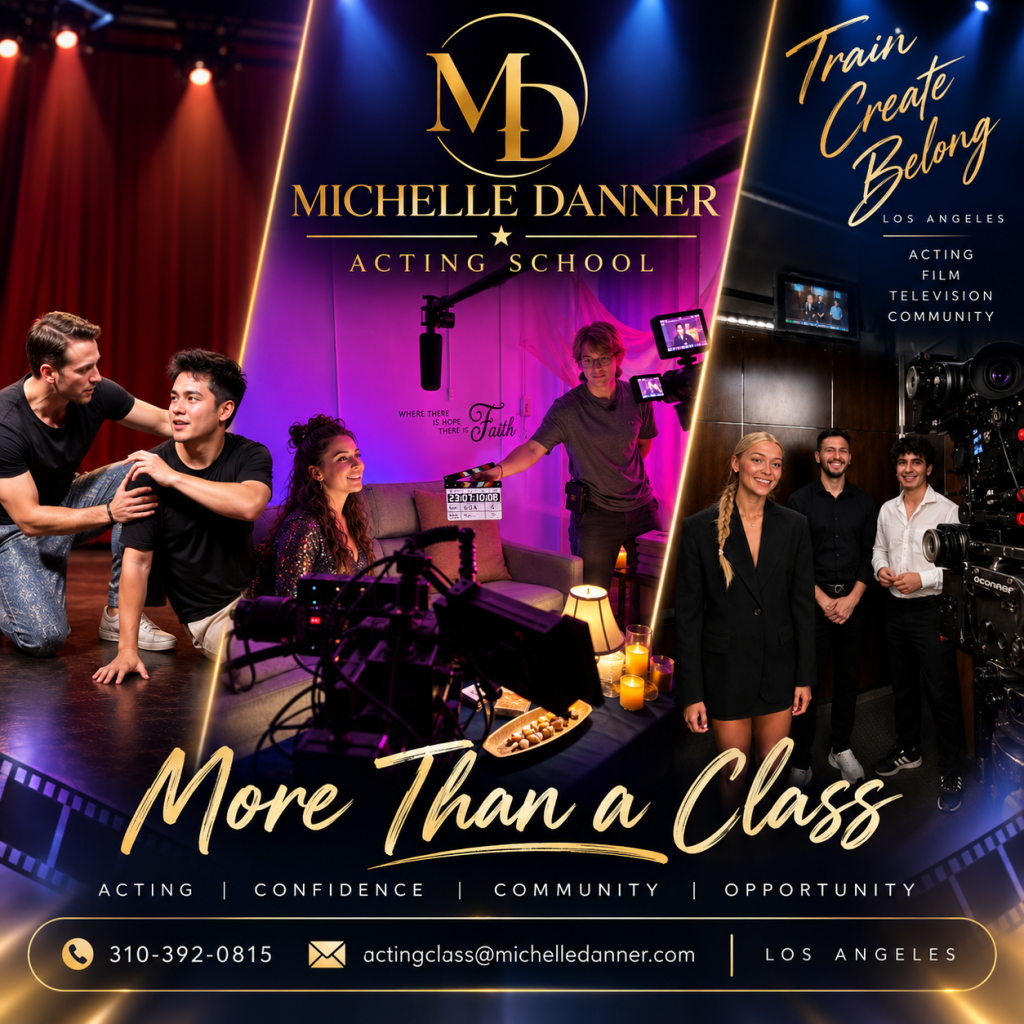
At Michelle Danner Acting School, actors can combine acting training with filmmaking classes in Los Angeles, giving performers an opportunity to understand not only what happens in front of the camera, but also how a film is created behind it.
Learning about filmmaking can help actors understand:
- Directing
- Camera placement
- Shot composition
- Production
- Editing
- Storytelling
- Working with a director
- Creating original content
For actors interested in becoming creators, filmmaking training can also provide a pathway toward developing their own short films, web series, and digital projects.
Can I Take Online On-Camera Acting Classes?
Yes. Actors who do not live in Los Angeles can also develop their screen acting skills through online acting classes and online acting coaching.
Online acting training can include:
- Scene study
- Acting technique
- Audition preparation
- Self-tape training
- Monologue work
- Film and television acting
- Private acting coaching
Online classes can be particularly useful for actors who want professional training while living outside Los Angeles.
Michelle Danner Acting School offers online acting classes in addition to its in-person acting and filmmaking training in Los Angeles.
What Is the Difference Between Acting Classes and On-Camera Acting Classes?
General acting training can help actors develop their overall craft, while on-camera acting classes specifically address the technical and performance requirements of working in front of a camera.
| Acting Training | On-Camera Training |
|---|---|
| Acting technique | Camera technique |
| Scene study | Film and TV scenes |
| Character development | Screen performance |
| Improvisation | Self-tapes |
| Voice and speech | Eyelines |
| Movement | Close-ups and framing |
| Monologues | Multiple takes |
| Emotional preparation | Continuity |
The two types of training can complement each other.
A strong screen actor needs both acting technique and an understanding of how that technique translates to the camera.
Michelle Danner Acting School: On-Camera Acting Classes in Los Angeles
Michelle Danner Acting School offers acting training for performers interested in developing their craft for professional performance.
Located in Los Angeles, the school offers in-person acting classes, on-camera acting classes, film and television acting, filmmaking classes, scene study, audition training, private acting lessons, and online acting classes.
Actors can develop their skills through different areas of training, including:
- On-camera acting
- Film and television acting
- Audition acting
- Scene study
- Improv
- Meisner training
- Voice and speech
- Private acting coaching
- Filmmaking
- Self-tape preparation
- Online acting classes
The combination of acting and filmmaking education can be particularly useful for actors who want to understand both performing in front of the camera and creating content behind the camera.
How Do I Become More Comfortable in Front of a Camera?
The answer is practice.
The camera can feel intimidating when you’re constantly thinking about how you look or whether your performance is “good.”
With training, actors can learn to shift their attention away from the camera and back toward the character, circumstances, scene partner, and story.
Listen. Respond. Make choices. Stay present. Trust the camera.
The more you practice, the more comfortable the process can become.
Whether you’re a beginner learning on-camera acting for the first time, an experienced actor preparing for film and television auditions, or a performer looking to improve your self-tapes, structured training can help you develop your screen acting skills.
Start Your On-Camera Acting Training in Los Angeles
If you’re searching for on-camera acting classes in Los Angeles, film acting classes, acting classes Los Angeles, audition acting classes, self-tape acting classes, or an acting coach in Los Angeles, Michelle Danner Acting School offers training designed to help actors develop both their craft and their practical performance skills.
Learn to stop “acting at the camera” and start living truthfully within the scene.