
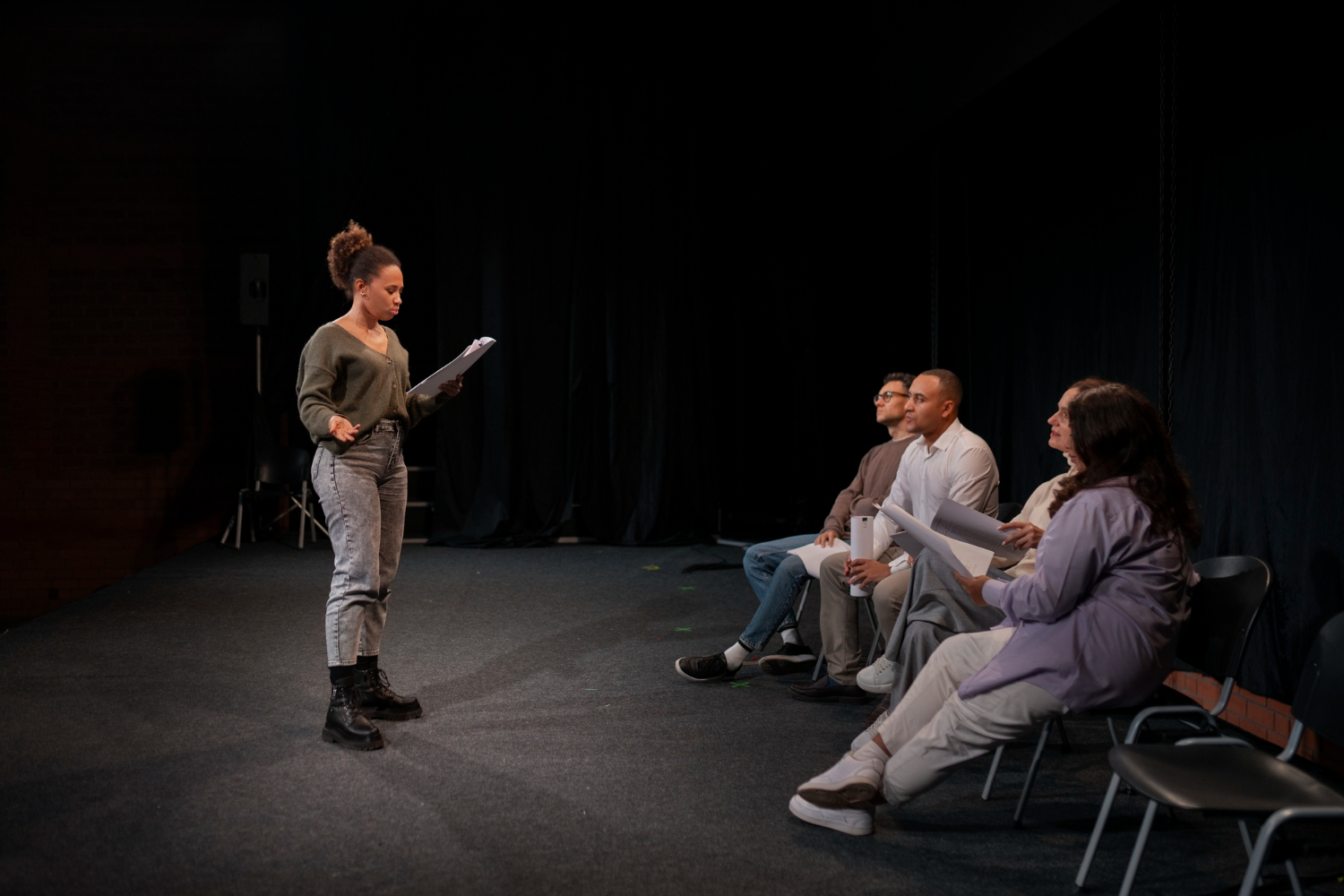
Stop Losing L.A. Movie Auditions Before You Begin
Casting directors often know in the first few seconds if they want to keep watching you. Your monologue is usually where that decision happens. If it feels off, they tune out fast, even if you are talented and right for the role.
Monologues still matter in LA movie auditions, even with self-tapes and on-camera sides. Your piece shows how you handle text on your own, how you think, and how you live inside a character without help from a scene partner. In a busy casting season, when rooms are full, and tapes stack up, a smart, sharp monologue can separate you from the crowd.
We want to walk through the most common monologue mistakes we see actors make, and how to fix them. When you know what to avoid, you can prep smarter and give casting a clear, confident picture of what you bring to their project.
Choosing the Wrong Monologue for the Room
Many actors lose LA movie auditions before they even say the first line, simply because the piece does not fit the project.
A big problem is tone mismatch. For example:
- Doing a heavy crying piece for a fun, high-energy comedy
- Bringing a quirky comedic rant to a grounded drama
- Ignoring the style of the director or the movie’s world
When you skip research on genre and tone, you tell casting you do not understand the project. Before you pick a monologue, ask: What type of movie is this? What kind of characters live here? Is this more grounded or heightened?
Another mistake is using overdone or age-inappropriate material. Common issues include:
- Famous movie speeches that casting has heard hundreds of times
- Roles written for a different age range than yours
- Material that does not match how you are most likely to be cast right now
LA movie auditions often reward actors who bring clear, specific material that fits how they naturally read on screen. Fresh writing that lines up with your current casting type lets them see your “brand” in action.
Length and structure also matter a lot. If your piece is:
- Too long and you get cut off halfway
- Too short and feels unfinished
- A flat chunk of text with no arc
Then casting cannot watch a full emotional shift. Choose a monologue with a clear beginning, middle, and end, something you can complete in about 60 to 90 seconds. Time it out, including breaths and pauses, so you are not rushed or cut mid-thought.
Playing Emotion Instead of Pursuing an Objective
One of the biggest traps is “playing emotion.” That means trying to look sad, angry, or intense, instead of going after what your character wants. The focus is on the feeling, not the action.
Acting techniques like Meisner, Stella Adler, and Stanislavski pull your attention back to behavior and objective. We want to see: What are you trying to get from the other person? How are you going after it, moment by moment? LA casting teams respond to work that feels grounded and alive, not performed for effect.
Often, a monologue feels flat because there are no real stakes or conflict. To fix this, you need to answer:
- Who am I talking to?
- What do I want from them right now?
- What happens if I do not get it?
- What inner blocks or fears are in my way?
When you build in obstacles and real risk, your energy rises. The words stay the same, but the tension and drive underneath change everything.
Another common issue is forgetting to listen. A monologue is still a conversation, even if the other character never speaks. When you treat it like a speech, it becomes general and presentational.
Help yourself by:
- Picking a specific, imaginary partner
- Placing them in a clear spot in the room
- Letting their “silent” reactions affect your next line
If you allow yourself to listen and respond, we see thought, surprise, and real connection.
Technical Delivery Mistakes That Kill Strong Choices
Sometimes the acting choices are strong, but the delivery blocks them.
Nerves can cause rushed pacing. You start talking faster, your breath gets shallow, and the story becomes hard to follow. Without clear beats and shifts, everything hits at the same volume and intensity, so nothing lands.
Work on:
- Breathing out before you start
- Letting yourself pause at key turns
- Marking where the character’s thoughts change
Good pacing helps casting track your character’s inner journey.
Vocal and physical habits also send loud signals on camera. Some common problems:
- Dropping volume or mumbling at the ends of lines
- Overly big gestures that feel like stage acting
- Constant fidgeting that pulls focus from your eyes
On-camera LA movie auditions usually need more stillness and smaller, cleaner choices. Know your frame. Let your face and eyes carry the story, and let your body support that, not fight it.
Eyeline, framing, and use of space can either support or distract from your work. Avoid:
- Staring straight into the lens when you are not supposed to
- Placing your eyeline too high or too low so it looks odd
- Pacing or rocking side to side
For self-tapes, “stage” your monologue so the camera sees your best angle and connection. In the room, pick a focus point that feels like a real partner, not the casting director’s face, unless they ask.
Preparation Pitfalls That Show up in the Room
You can tell when someone only crammed the words the night before. They are off-book, but they are not living in the circumstances. Under pressure, lines blank or go flat.
Instead of just drilling text, you want layered rehearsal that ties words to behavior and intention. Techniques that build repetition, listening, and truthful response help your work stay alive even when you are nervous.
Many actors also skip script analysis and backstory. When you treat the monologue like it exists in a void, it feels thin. Start by answering simple, specific questions:
- What just happened before this moment?
- Where am I, and why now?
- What do I expect the other person to do?
Clear given circumstances make even a short piece feel rich and personal.
Audition etiquette matters too, especially in high-volume LA sessions during busy casting waves. Common mistakes include:
- Starting before you are settled and connected
- Ending with an awkward “uh, that’s it” instead of a clean button
- Pushing for another take or ignoring time limits
- Not really listening to adjustments
Build a small pre-audition routine. Take a breath, place your eyeline, drop into the character’s situation, then begin. When you finish, let the last moment land, then return to yourself calmly.
Transform Mistakes Into Bookings with Smart Training
Every “no” can show you what to work on next. If you keep hearing similar feedback, that is your training roadmap. Work monologues regularly in class, not just when an audition appears. Ongoing technique training gives you more tools so you are not guessing in the room.
It also helps to practice in conditions that feel close to real LA movie auditions:
- On camera, with a time limit
- With bright lights and a reader in the room
- Under a bit of time pressure, so you learn to stay loose when it counts
Mock auditions and on-camera workshops can help make the casting room feel familiar instead of scary.
At Michelle Danner Acting Studio in Los Angeles, we focus on building strong monologue skills on top of solid technique, so your choices hold up when the auditions stack up in spring and beyond. With clear objectives, smart text work, and on-camera awareness, your monologues can stop losing you roles before you start and instead become one of the strongest parts of your LA movie auditions.
Start Landing Real Roles In LA Movie Auditions Today
If you are ready to turn your on-camera training into real work, Michelle Danner Acting Studio will help you build the skills casting directors look for in LA movie auditions. Our coaches guide you through audition prep, self-tapes, and performance techniques tailored to the Los Angeles market. Take the next step toward booking roles and growing your career by reaching out so we can help you choose the right class track. If you have questions or want personalized guidance, contact us today.