
Stop Blaming the Camera and Start Fixing the Work
You know that feeling when your scene in class crackles with energy, but your self-tape looks flat and stiff? In the room, you feel alive, brave, and present. On camera, it looks like all the air got sucked out. That gap can feel confusing and personal, especially when auditions pick up in late summer and you want your work to stand out.
The truth is, your Meisner acting technique is not the problem. Meisner is built for honesty, real listening, and moment-to-moment truth. The issue comes when that same energy is not adjusted for the frame of a camera. What feels powerful in a classroom can look messy, indulgent, or too big when the lens is only a few feet from your face.
Our goal here is simple: show you how to keep the heart of your Meisner work while shaping it for film, TV, and self-tapes. At our studio in Los Angeles, we put a big focus on bridging strong technique with on-camera skill, both in-person and online, so actors can book real roles without losing their artistic voice.
Why Pure Class Energy Dies in a Close-up
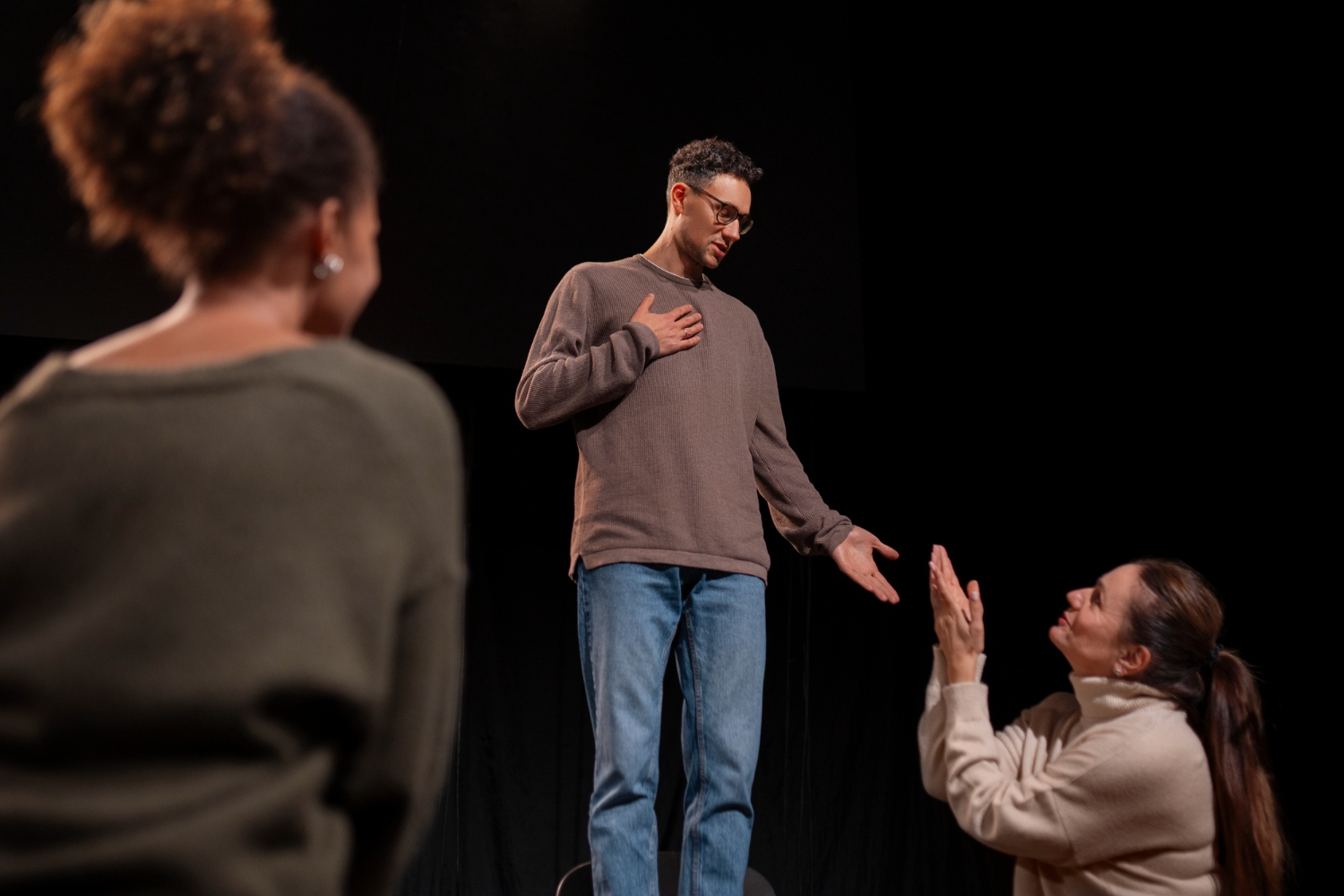
In class, you have space. You can move around, gesture wide, pace, and use your whole body. Your partner is right there, and you can feel the shared energy in the room. You are not thinking about a frame, a mark, or where your eye line should be. You are just living.
On camera, everything shrinks. The frame might be from your chest up, or tighter. Your movement is limited. The focus is on your eyes and tiny shifts in your face. If you bring the same classroom size into a close-up, it can read as:
- Playing to the room instead of the camera
- Over-projecting emotions and volume
- Unclear, muddy behavior that pulls focus from the story
This feels especially rough in summer when more actors are taping scenes for reels or rushing to send self-tapes for pilots and new shows. Many discover that the emotional heat they rely on in class suddenly feels loud, erratic, or oddly dull on screen. The work is alive inside you, but the camera only catches part of it, and that mismatch kills your confidence.
To fix it, you do not need to throw away your training. You need to reshape it for a different medium.
Meisner Repetition vs. the Demands of the Frame
Meisner repetition and independent activities are powerful tools. In class, they become the main event. You listen, respond, and let things build. You notice every shift in your partner and throw it back. It feels raw and exciting.
On camera, the focus shifts. Casting is not watching to see how far you can push repetition. They are looking for:
- Clear story beats
- Simple, readable behavior
- Specific objectives and relationships
- Subtle shifts that still land in a tight shot
Here is where many actors get stuck. They get addicted to being “interesting” in repetition, adding extra behavior just to feel alive. In a close-up, this can look random, self-indulgent, or confusing. The audience does not know why you keep moving, laughing, or changing focus.
A better way to use Meisner in front of the camera is to treat repetition as ignition, not the destination. Let it:
- Wake up your listening
- Open your emotional life
- Lock you into real relationship
Then, once you are lit up, you discipline it. You pull back the volume, shape your physical life, and hold your eye line in a way that matches the frame. The behavior stays honest, but it is cleaner, simpler, and driven by the story, not by your need to feel “busy.”
Emotional Truth Without on-Camera Structure Falls Flat
There is a common belief that if your emotions are real, the work will land. On camera, that is only half the equation. Film and TV also demand structure. The editor needs continuity. The director needs you to repeat behavior. The camera crew needs you to hit the same mark every take.
Meisner-trained actors sometimes chase fresh emotion in every run. That can be great in class, where you are exploring and breaking habits. But on set, you need to re-create behavior with precision while staying alive inside it. If every take looks wildly different, the performance may feel truthful to you, but it becomes hard to cut, and it can read as unfocused.
This becomes clear during late-summer self-tape waves for indie films, festival projects, and new TV episodes. You might:
- Do one take where you are very emotional
- Then another where you are oddly calm
- Then one where your blocking changes completely
When you watch the tapes back, they do not look like the same character. That is where on-camera structure comes in. You want:
- Consistent physical choices that you can repeat
- Clear emotional arcs that grow instead of jumping
- The ability to stay spontaneous inside a steady frame
Meisner gives you the heart. On-camera technique gives you the shape. You need both.
Adapting Meisner Acting Technique for Self-Tapes
Self-tapes are now the main doorway into many jobs. Your reader is usually off-camera. You are locked to one frame. You might be taping in your bedroom or living room, not a big studio. Still, your job is the same: listen, respond, and bring the story to life.
To adjust your Meisner acting technique for self-tapes, try shifting how you think about the work:
- Let repetition become simple, active listening instead of a full exercise
- Ground your imaginary circumstances before you roll, so you are ready on the first frame
- Choose behavior that is specific and readable, not wild or general
You also cannot ignore the technical side. If the lighting is bad or the sound is noisy, your best work will get lost. Casting directors watch many tapes in a row. If they cannot clearly see your eyes or hear your voice, they move on. Basic technical care supports your craft, so your truth actually reaches the people watching.
Self-tapes are a great place to practice doing less. Keep the inner life big and the outer behavior clean. Use the lens like it is your partner. Let it in on your thoughts.
Turn Flat Training Into Bookable On-Camera Work
Your Meisner base is a gift. It teaches you to listen, to respond truthfully, and to live in the moment. To turn that into work that books, you need to translate those skills into clear, camera-ready choices. That means adjusting size, repeating behavior, honoring the frame, and serving the story, not your ego.
A smart step is to review your old self-tapes with a cold eye. Notice where you look theatrical, unfocused, or muddy. Ask yourself: Is my behavior simple and clear? Is my listening real but not messy? Do my choices match the frame? From there, you can set real goals for tightening your on-camera work before the busy fall season of auditions and callbacks.
At Michelle Danner Acting Studio, we care a lot about helping actors build that bridge between strong Meisner training and sharp on-camera skill. Through in-person and online classes, we work on keeping your truth alive while shaping it into work that directors, casting directors, and audiences can actually use on screen.
Unlock Emotional Truth With Proven Meisner Training
Ready to bring real, honest behavior to every moment you play on stage or on camera? At Michelle Danner Acting Studio, we guide you step by step through the Meisner acting technique so you can listen deeply, respond truthfully, and stay fully alive in the scene. Whether you are just starting or leveling up your craft, we will help you build reliable tools you can use in every audition and performance. If you are unsure which class is right for you, simply contact us and we will help you map out the best path forward.