
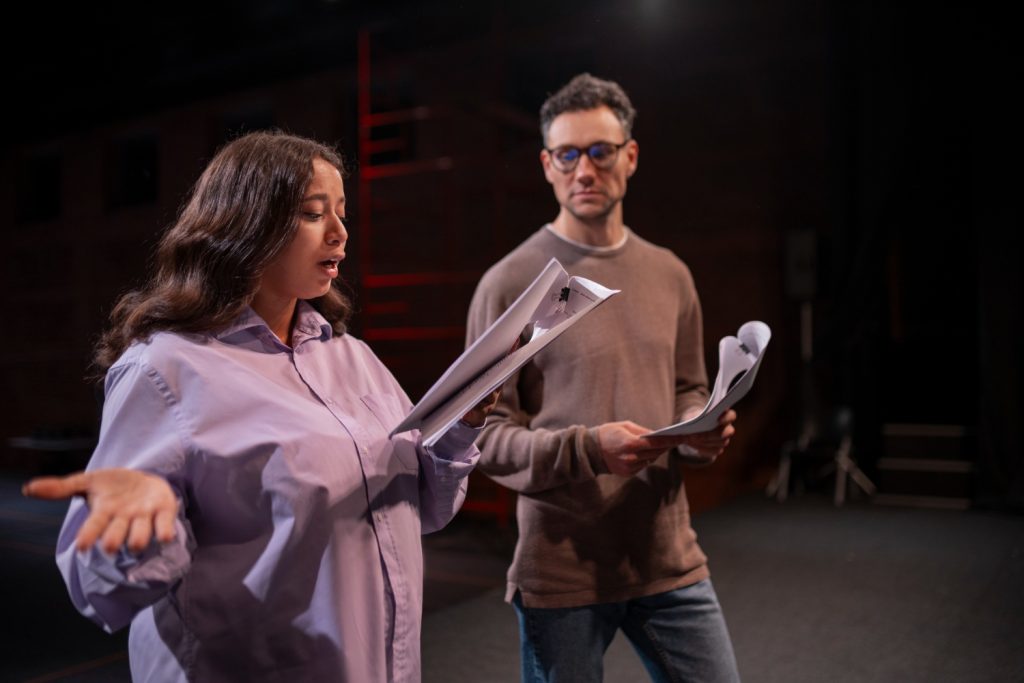
It’s easy to get caught up in memorizing lines, especially when you’re just starting acting classes. You want to get the words right. You don’t want to freeze. So you keep running your lines over and over, hoping that will be enough. But acting isn’t about repeating. It’s about responding. That’s where a scene study class comes in.
With cooler weather in Los Angeles and shorter days, winter is a great time to slow down and refocus on technique. Scene study helps actors stop worrying so much about the script and start noticing what’s really happening in a moment. Instead of just saying the words, you start to understand who you’re saying them to and why. At Michelle Danner Acting Studio in Los Angeles, scene study training centers on script analysis, character development, and emotional truth so you can bring more depth to work in film, television, and theater. (michelledanner.com) That shift is powerful. It’s what gets your performance noticed.
Tuning In to the Moment
In a scene study class, one of the first skills you build is presence. Not the kind of presence that comes from big gestures or dramatic pauses, but the kind that comes from attention. You’re not memorizing what to say, you’re noticing what’s happening around you.
That means you start to:
- Listen with your body and your eyes, not just your ears
- Pick up on how your scene partner moves, pauses, or delivers a line
- React to what you feel in the room, even if it’s different each time
When you stop trying to remember your next line and start focusing on the moment, your performance opens up. You sound more like a real person, not someone delivering practiced words. That shift is part of what makes scene study feel so different than scripted rehearsals.
Finding the Meaning Behind the Lines
Most scripts don’t hand everything to you. The best lines leave things unsaid. That’s your job as the actor, to figure out what’s underneath. That’s what scene study lets you do.
When you work in this way, you begin to:
- Ask what your character wants, not just what they say
- Think about how past experiences might shape their behavior
- Notice the tension or emotion that sits between the lines
Understanding what your character is fighting for, hiding, or avoiding makes every choice you make feel more real. You stop relying on the words to carry the emotion and start building it from the inside out. That’s when a scene goes from flat to honest.
Building Real Connections With Scene Partners
One special part of scene study is the chance to work with the same material, and the same partner, for more than just one class. Instead of rushing to a finished product, you get time to explore. That space can create something that often gets missed: connection.
Over time, this work helps you:
- Learn your partner’s rhythms and habits
- React to energy shifts in a room or a scene
- Build trust that lets both of you take more risks
The more time you spend with a scene, the more you see its shape. And the more you share that work with someone else, the more your choices start to feel real. That’s something every actor benefits from, whether they’re just starting or already performing regularly.
Growing Confidence Through Repetition
Running a scene multiple times doesn’t have to feel boring or stiff. In a good class, each pass through the scene feels a little different. You try new tactics, bring in different feelings, and notice new moments.
This regular practice helps you:
- Feel more comfortable making different choices
- Learn that it’s okay for the scene to change
- Trust that the right reaction will come when you’re present
With a teacher giving you feedback and scene partners growing with you, you stop worrying about what’s right. You begin to notice what feels honest. And over time, your gut gets stronger. That confidence sticks around, even when you’re working on something brand new.
Building Skills You Can Take Anywhere
Once you stop focusing only on your lines, your skills start to stretch. They don’t stay inside one scene or one class. You carry what you’ve learned into auditions, rehearsals, and even live performances. Michelle Danner Acting Studio offers scene study classes for beginner, intermediate, and advanced actors, so you can practice these skills at the level that matches your experience. (michelledanner.com) If you are outside Los Angeles, Michelle Danner Acting Studio teaches scene study and monologue work in live online classes, so you can still build these habits with real-time coaching. (michelledanner.com)
Actors who go through scene study often say they become better at things like:
- Taking risks in their choices
- Staying calm when a line gets dropped or a cue is missed
- Bringing more of themselves into a role
These are the moments that make a difference. They give you color and depth on stage or on camera. The repetition, the reactions, the deep work, all of it shows up when you least expect it but need it most.
More Than Just Memorization: The Real Gift of Scene Study
Scene study doesn’t just help actors become better at performing. It helps them slow down and remember why they love it in the first place. It asks you to look past the lines and pay attention to what’s alive in each moment.
When we stop relying on memorization and start leaning on connection, our acting starts to feel honest again. Real scenes, real reactions, and real growth. The words matter, but they’re only part of the story. When the rest of it clicks into place, the scene finally feels full.
At Michelle Danner Acting Studio, we know that going beyond memorization to discover true meaning in your performance can transform your craft. Whether you’re expanding your emotional range or building trust with scene partners, the skills you develop in a scene study class in Los Angeles, California can strengthen every aspect of your acting. Opportunities here are plentiful, so staying sharp and connected is important. Let’s connect to discuss how we can support your training journey and help you achieve more grounded, responsive performances.